The most common explanation B2B sales teams give for a lost deal is price. The customer went with someone cheaper. The market is too competitive. The budget wasn’t there. It is said with a shrug, logged in the CRM, and moved on from — and the real reason the deal was lost never gets examined.
Maran, Founder of TheDIco, has sat in on enough sales huddles across enough industries to know that most B2B sales teams lose deals long before price ever comes up. The problem is in the habits — how the team pitches value, how they handle the quote process, how they build pipeline, and how they follow up. Each of these is entirely within the team’s control. None of them are the customer’s fault.
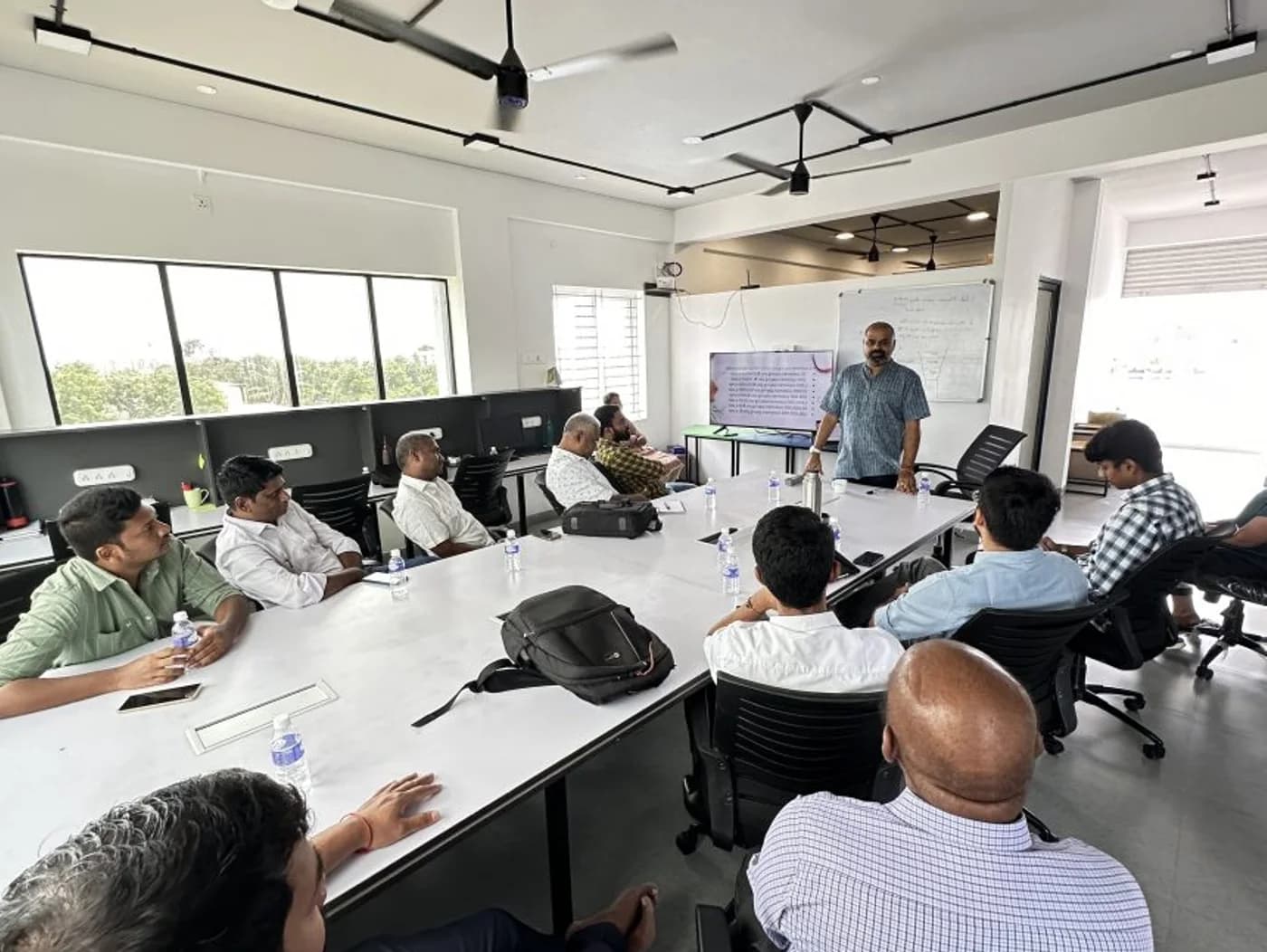
This field guide is built from a real sales coaching session with a real B2B team, fully anonymised. It covers five habits that quietly cap revenue in most small and mid-sized B2B companies in India — and includes a one-page diagnostic that reveals which ones are costing your team the most right now.
Why B2B sales teams lose deals is rarely the price. The most common causes are habits: failing to demonstrate value before quoting, not knowing the customer’s budget before building the proposal, using claims instead of proof, neglecting pipeline as a daily discipline, and following up in a way that signals chasing rather than selling.
60% of qualified B2B pipeline ends in no decision — not lost to a competitor, not lost on price. Source: HBR / Dixon & McKenna, 2025
61% of sales reps blame ‘indecision’ for lost deals. The real top reasons: budget 22%, not a priority 20%, competition 14%. Source: Industry benchmarks, 2024–25
39% higher win rate when teams avoid discounting until after the conversation. Deals that skip a stage are 46% less likely to close. Source: Scaled Consulting, 2025
Want the full breakdown of all five habits — with the real coaching session examples and Monday morning actions?
Most deals blamed on price were lost in the pitch
Every time a sales team logs a deal as “lost on price” without asking whether the customer was comparing like with like, the real reason moves to a place the team can’t fix. A premium product sold with a budget-level pitch will lose to a cheaper alternative almost every time — not because the product is wrong, but because the value was never established before the number arrived.
The five habits below are the ones Maran consistently finds in B2B sales teams that are capable of winning more business but aren’t. They are not about technique or scripts. They are about how the team thinks about the sale before the call even starts.
This page names all five. The full breakdown of each — what it looks like in a real team, why it happens, and the exact shift that fixes it — is in the guide.
Five habits that quietly cap B2B revenue
These five shifts came out of a real internal sales huddle, fully anonymised. The team was losing deals they should have won. The diagnosis was not the product, the price, or the market. Inside the field guide, Maran breaks down each habit — what it looks like, why it happens, and the exact shift that fixes it.
- 01. The Price Excuse — Why “we lost on price” is almost never true — and the one question that reveals what actually happened.
- 02. The Quote Built Blind — The single missing detail in most quote processes that quietly bleeds margin on every deal.
- 03. Claims vs. Proof — Every competitor says they’re high quality. Why buyers stopped listening — and what moves them off price entirely.
- 04. The Starving Pipeline — The team isn’t lazy. The pipeline is empty for a completely different reason — one most founders never measure.
- 05. The Debt Collector Follow-Up — The follow-up message that feels harmless but trains customers to ignore you.
Each shift comes with a real example from the coaching session and a Monday morning action your team can run this week — all inside the guide.
Most deals you lost on price were lost in the pitch. And the pitch is the one thing you actually control.
What a sales system that fixes this actually looks like
The five shifts are habits. And habits do not survive a busy week unless something underneath makes the right thing the easy thing. For a B2B sales team, that something is usually the CRM — but not the way most SME teams use it. Most CRMs in small and mid-sized companies are expensive filing cabinets. Data goes in. Nothing useful comes out.
A functioning sales system makes account status visible at a glance, captures the day’s activity in a quick end-of-day log, and puts proof one click away so reps never fall back on price because they cannot find the right asset. This is the layer underneath the five shifts — and it is where TheDIco’s audit work with B2B founders usually starts.
The full field guide — all five shifts, the real examples from the coaching session, the Monday morning actions, and the one-page diagnostic — is free to download below.
The one-page diagnostic — find out which habit is costing you most
The field guide ends with a 13-question diagnostic across six categories: value and price, the quote process, proof, follow-up, relationships, and pipeline discipline. You tick only what is honestly true — not what you mean to do.
Three of the thirteen questions:
- When we lose on price, we can say whether the customer was even comparing like with like
- Whoever builds our quotes knows the customer’s likely budget before they start
- We know how many new accounts each rep opened yesterday
Your score places your team in one of three bands — and tells you exactly which shift to fix first. Most teams that run this honestly score under 7. Download the guide to run the full diagnostic on your team this week.
The full 13-question diagnostic, the score guide, and what to fix first — all inside the field guide.
People also ask
Why do B2B sales teams lose deals?
Most B2B sales teams lose deals for one of five reasons: they fail to demonstrate value before the price arrives, they build quotes without knowing the customer’s budget, they use claims instead of proof, they treat pipeline-building as optional, or they follow up in a way that signals chasing rather than selling. Research shows 60% of qualified B2B pipeline ends in no decision — not lost to a competitor. The issue is almost always habits on the seller’s side, not the customer’s budget. Maran’s field guide, Stop Blaming the Customer, breaks down all five habits with real examples from a sales coaching session.
How do you handle price objections in B2B sales?
The most effective way to handle a price objection in B2B sales is to test whether the customer is comparing like with like. If the competitor is selling a lower-spec solution and the buyer is treating both options as equivalent, the problem is not the price — it is that the value difference was never established. Discounting at that point does not fix the problem; it confirms it. The field guide from TheDIco covers the exact questions Maran uses to separate real price objections from value-communication failures.
Why do customers always say it’s too expensive?
When customers consistently say a product is too expensive, it usually means one of two things: the value was never articulated in terms that connected to their specific situation, or the sales conversation moved to price before trust or proof was established. Research from 2025 found that the first vendor to establish value wins the business 74% of the time. The price objection is most often a signal that the seller arrived at the number before the buyer understood what they were buying.
How do you build B2B sales pipeline consistently?
Consistent B2B pipeline comes from treating new-account outreach as a daily number with its own target — separate from chasing existing live deals. Most sales teams have no pipeline discipline because pipeline-building is what happens if there is time at the end of the day, and there is never time. The fix is a daily reach metric that tracks both volume and depth. TheDIco’s field guide includes the Monday morning routine that makes this practical for teams of two to twenty.
What is the most common reason B2B deals are lost?
According to research across thousands of B2B sales teams, 60% of qualified pipeline ends in no decision — not in a loss to a competitor. Of the deals reps do classify as lost, 61% are attributed to customer indecision. The actual top reasons are more specific: 22% lack of budget, 20% not a priority, 14% competition. Price is cited as the cause far more often than the data supports. In practice, most deals recorded as ‘lost on price’ were lost earlier in the conversation.
How do you train a sales team to sell value instead of price?
Most sales training focuses on closing technique. The highest-return work is further upstream — making sure that by the time the number arrives, the value has already been demonstrated. That shift is built on habits, not scripts: proof over claims, budget discovery before the quote, and follow-ups that carry something useful. Maran’s field guide, Stop Blaming the Customer, covers all five habits that determine whether this happens consistently — with a Monday morning action for each.
Which of the five habits is capping your team’s revenue?
Run the diagnostic and find out. If your score comes back under 7 and you want to talk through what to fix first, Maran does that conversation for free — no pitch, 30 minutes.