Six months after launch, is your sales team still logging deals in spreadsheets?
If your sales team isn’t using the CRM, blaming them might seem easy, but poor CRM adoption is a system problem that creates an unreliable pipeline.
Teams avoid the CRM for many common reasons: it adds extra tasks, no one explained why it matters, or the screen is cluttered. As a result, data goes stale, pipeline reports lose credibility, and leadership loses visibility into what’s actually happening.
Here, the solution isn’t to issue a strict mandate. Focus on making the CRM easier, more useful, and rewarding. This blog covers everything around CRM adoption, its significance, strategies to increase CRM adoption, the challenges, and how to measure CRM adoption.
Key Takeaways
- Poor CRM adoption is a setup problem, so fix that first.
- Show each rep how CRM saves their time and helps them close deals.
- Choose a CRM that fits how your team works and logs activity.
- Train your team as per role and keep supporting after the launch.
What Does CRM Adoption Mean?
CRM adoption is how much your team uses your CRM as the centre of how they work. CRM adoption means going beyond just logging and relying on the CRM daily to manage contacts, track deals, log activities, and generate reports.
High user adoption means the entire team is working from the same data. Low adoption means the CRM is technically active, but in practice, it isn’t being used.
Why Does High CRM Adoption Matter to Businesses?
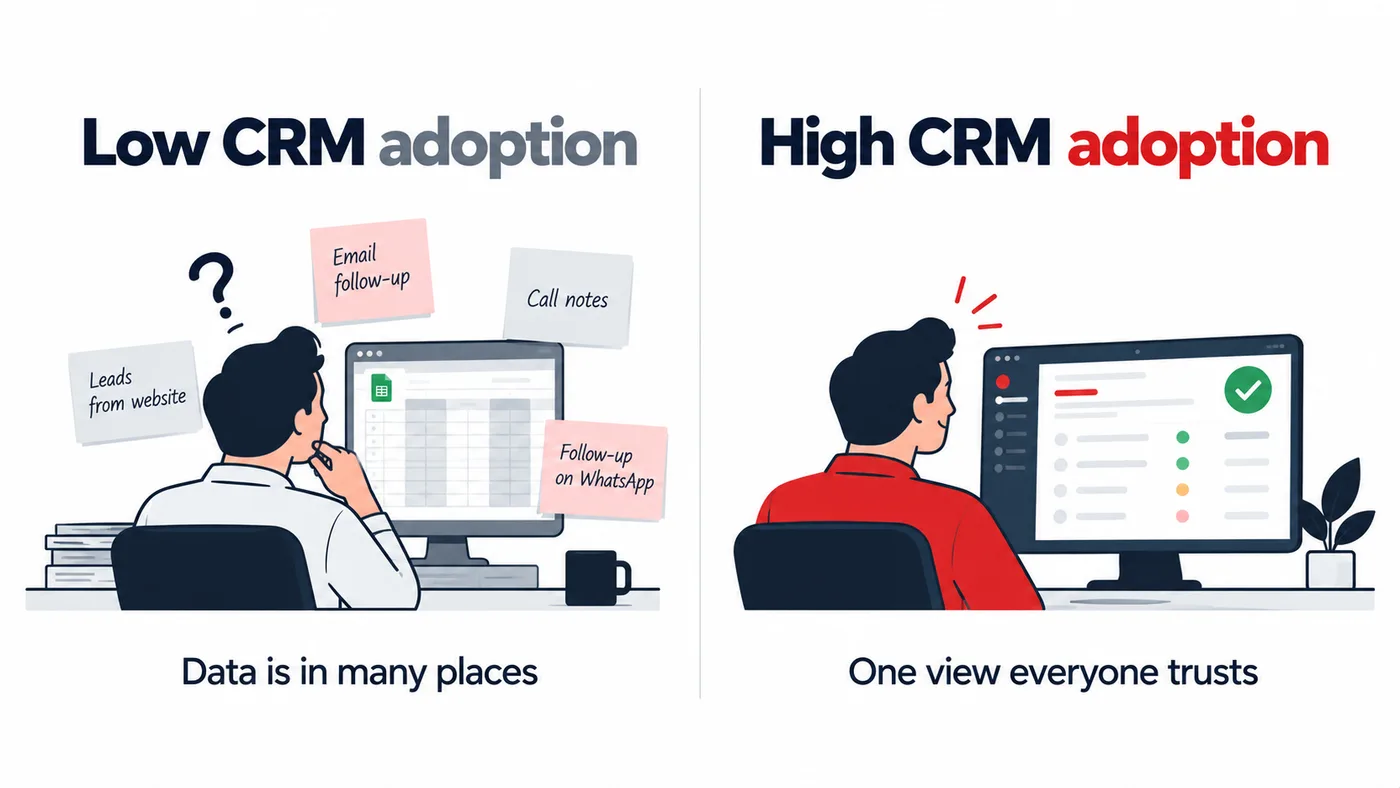
High CRM adoption means your team uses the CRM before every decision, so the data reflects the business’s latest state. For example, leaders adjust numbers they know are off. When pipeline data is updated, they don’t fix numbers by hand, and quarterly targets, headcount, and territory planning are based on real data.
It also changes the customers’ experience. Sales, service, and renewal teams see the same history, so old commitments and complaints are clear, and customers don’t have to explain the same things again and again. Reminders, sequences, and task rules run based on reliable records and conversation records. That is the gap between a CRM that only records data and one that actually helps you manage your business.
Strategies to Boost CRM Adoption
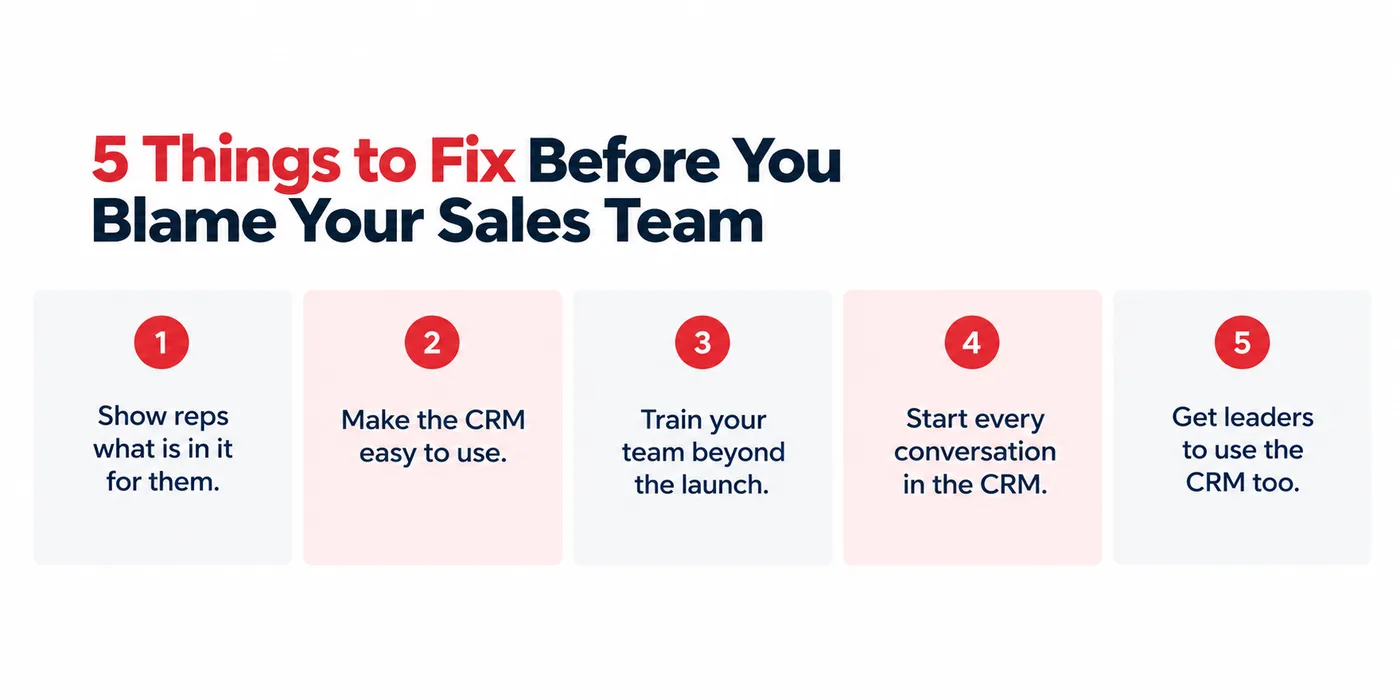
If you are wondering how to improve CRM adoption, treat it as an ongoing playbook that includes technology, clear expectations, and consistent reinforcement. These are the five things to fix to increase CRM adoption from day one.
1. Show Reps What Is in It for Them
Reps mostly see the CRM as a task that benefits managers. They enter data but get nothing in return, so they prefer keeping notes in a spreadsheet. Every employee should know what’s in it for them. Discuss the CRM around direct rep benefits: it tracks every interaction, surfaces deals, and automates the time-consuming admin tasks. Connect CRM usage to outcomes reps look for, like more closed deals, shorter ramp time, and better commission.
2. Make the CRM Easy to Use
Treat the CRM like a new machine on the factory floor; if it doesn’t work fast, work will revert to the old way. Choose a CRM that perfectly fits your team’s working approach. Give reps a voice when selecting from different CRM options; let them try it and share feedback before the final decision. When reps who actually evaluate the tools launch with product knowledge and ownership, CRM adoption improves. After it is live, ask reps what slows them down and fix that first. A CRM audit can show where the friction sits.
3. Train Your Team
A one-hour session isn’t enough for CRM; make it a real part of new-hire onboarding. Provide new reps with pre-configured views populated with their assigned accounts so the CRM feels helpful from the first day. After launch, keep helping with short tips, role-specific refreshers, process-update walkthroughs, and a 30-60-90 day plan.
4. Start Conversations in the CRM
When you review deals with your team, check where the numbers come from. If the answer is the rep’s memory, the CRM is still optional.
Run pipeline reviews, deal coaching, and one-to-one meetings through CRM data. If a deal is not in the CRM, do not discuss that. Reps will see that an updated CRM is how they get support on their deals.
5. Encourage Key Leaders to Use the CRM
As long as senior leaders track the pipeline on a whiteboard or take verbal updates, reps will treat the CRM as optional. People follow what leaders do, not what they say. Ask team managers and the leadership team to pull every pipeline number from the CRM, use reports for coaching, and celebrate achievements in the system.
Frequently Asked Questions
How do I increase CRM user adoption quickly?
To boost CRM adoption, remove friction, automate repetitive entry, connect to the tools your team already uses, and show a clear picture of how it will benefit them personally. The team should see quick wins in the first two weeks, because that’s when habits form.
How do you measure CRM adoption?
The best way to measure CRM adoption is to track login frequency, activities logged per rep, and the percentage of licensed seats used. You can evaluate data quality by checking for missing close dates, incomplete contact records, and stale opportunities.
What is the real cost of poor CRM adoption?
When teams don’t fully adopt the CRM, licensing and setup become sunk costs very quickly. Plus, data is dispersed, sales transparency is compromised, and agents make decisions based on wrong information.
Why does my sales team not use the CRM?
Sales teams may avoid CRM software when it requires excessive data entry, which can feel like a waste of time. For many, it seems too complex and does not fit their daily sales workflow.
Filed under
- CRM adoption
- Sales team
- Sales process