
In the sales-and-marketing handoff, good lead qualification means a lead is ready for a sales call if it fits your ideal customer profile, shows interest, has a real need, and will act soon. Marketing and sales should both agree on this in writing, along with who replies and what happens next.
Key Takeaways
- Sales and marketing should agree on what “ready” means for them and write it down.
- A lead is ready when it fits, shows interest, has a need, and has a reason to act soon.
- Pass the full story of the lead, and name one person who owns it.
- Track a few simple numbers to see if the handoff is working.
Lead handoff means passing the lead from marketing to sales; it is one of the major steps in lead management. Two conditions signal when to hand off your hard-earned marketing qualified leads to the sales team.
The lead should be warm, or have had a few touches with your company. The best way to assess both the “warmth” and the qualification of a lead is lead scoring. When a lead hits a score known to and agreed by both the sales and marketing teams, the handoff should be triggered.
Marketing says the leads are good and sales says they are not ready. Both are right, because they never agreed on what “ready” means. This gap breaks lead qualification, and it is one reason marketing looks like it is not working even when leads keep coming in.
Difference Between a Marketing Lead and a Sales Qualified Lead
A marketing qualified lead (MQL) means the person has shown interest but isn’t ready for a sales call yet. On the other hand, a sales qualified lead (SQL) shows the person is willing to receive direct follow-up. Here, one-on-one contact should be a priority. A lead is an SQL when sales accepts it and confirms the possibility after the first contact.
MQL to SQL Criteria: 4 Checks Before a Lead Gets a Call
Use these four lead qualification criteria:
- Fit: The lead fits the industry, company size, and role.
- Interest: The lead asked for a demo or pricing, replied, or came back more than once.
- Need: The lead has an actual need or problem that you are going to solve.
- Timing: There is a clear reason or a date to act, and the person can decide or influence the decision.
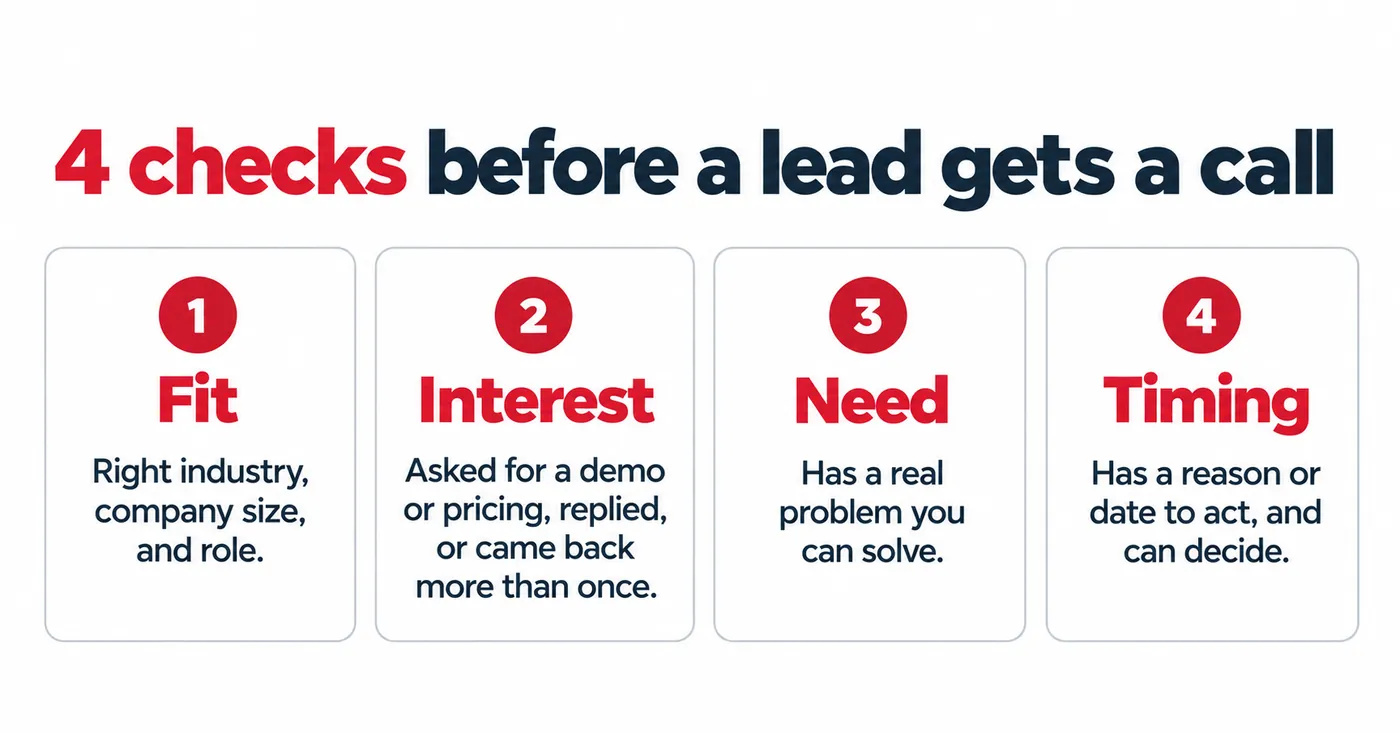
The fit check begins with a clear ideal customer. If sales keeps sending leads back, your ideal customer profile may be wrong. You may not need lead scoring yet. SmartBug Media says scoring helps when you have plenty of data and your reps are drowning in leads. Until then, simple routing rules can also work.
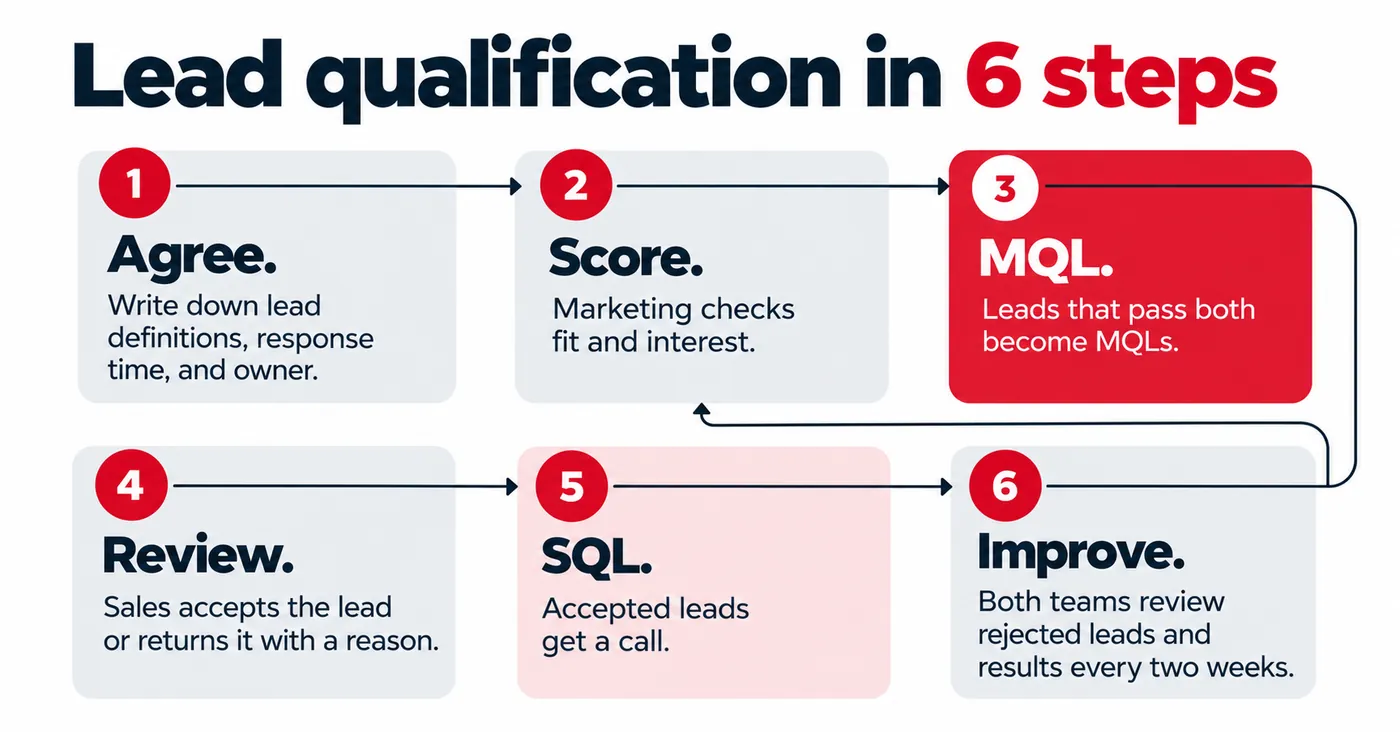
What Is a Simple Lead Qualification Process?
- Note down the agreement, including lead definitions, response time, and the lead owner.
- Marketing scores each new lead based on fit and interest.
- Leads that pass both steps become MQLs, or marketing qualified leads.
- Sales reviews each MQL within the agreed time and accepts it, or returns it with a reason.
- The leads sales accepts become SQLs and get a call.
- Marketing and sales review rejected leads and results together every two weeks.
Not sure where your leads get stuck between teams? See how TheDIco’s growth audit and strategy reviews your marketing process.
How Should Marketing Hand a Lead Over to Sales?
A strong sales-and-marketing handoff passes the story behind the lead, not just the name. The shared information should also include what the lead read and when, the problem that triggered their interest, notes on fit, and a suggested talk track. Name one owner for the lead, and set the handoff to trigger on its own, with a task and a reply deadline for the representative.
Speed plays a crucial role here. InsideSales found that replying within five minutes makes you about 100 times more likely to connect, yet the average B2B response time is around 42 hours.
5 Numbers That Show Your Handoff Is Working
Track these five numbers:
- How many MQLs sales accepts.
- Your MQL to SQL rate: how many MQLs become SQLs.
- Time to first response. Aim for under one hour on inbound leads.
- Common rejection reasons.
- How many reach a real opportunity.
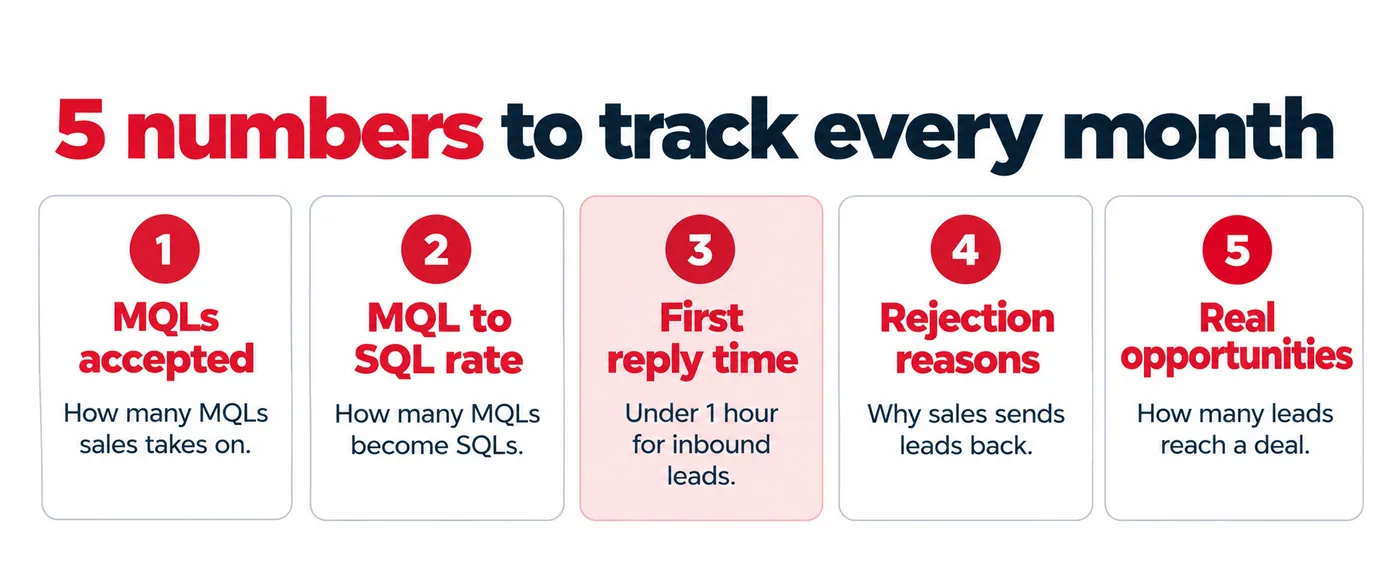
If the numbers are weak, fix the handoff before spending more. A marketing audit before hiring anyone new can help you understand the real gap.
Frequently Asked Questions
Filed under
- Lead qualification
- MQL to SQL
- Sales and marketing handoff